
Methodology

The 1 2 3 GO! program teaches students how to write numbers using a structured, multi-sensory approach that supports both motor development and mathematical understanding.
Instead of memorizing each number as a separate form, students learn that all numbers are built from four simple foundational strokes: the Tall Turn, Small Turn, Tall Turn, and Small Turn. Mastering these movements builds strong motor memory and gives students a “blueprint” for number formation. Because students understand the starting point and the building pieces, they can take apart and reconstruct each number mentally—strengthening visual memory and recall. The Teacher Manual also uses strategies that help students become the teacher, leading to full engagement and more independent, accurate number writing.
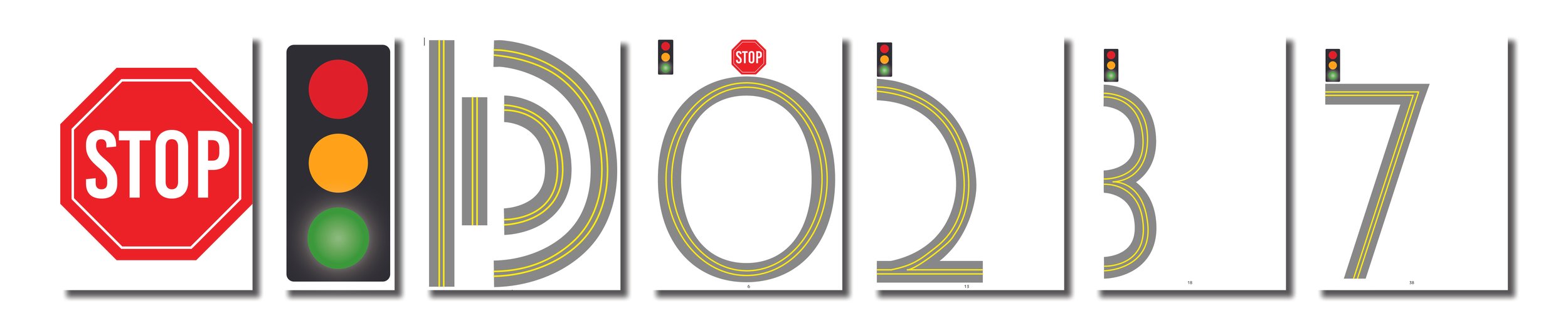
The program begins with large-motor movements to help students internalize the shape and direction of each stroke. As students gain control, they gradually transition to smaller writing tasks, reinforcing both visual memory and fine motor precision.
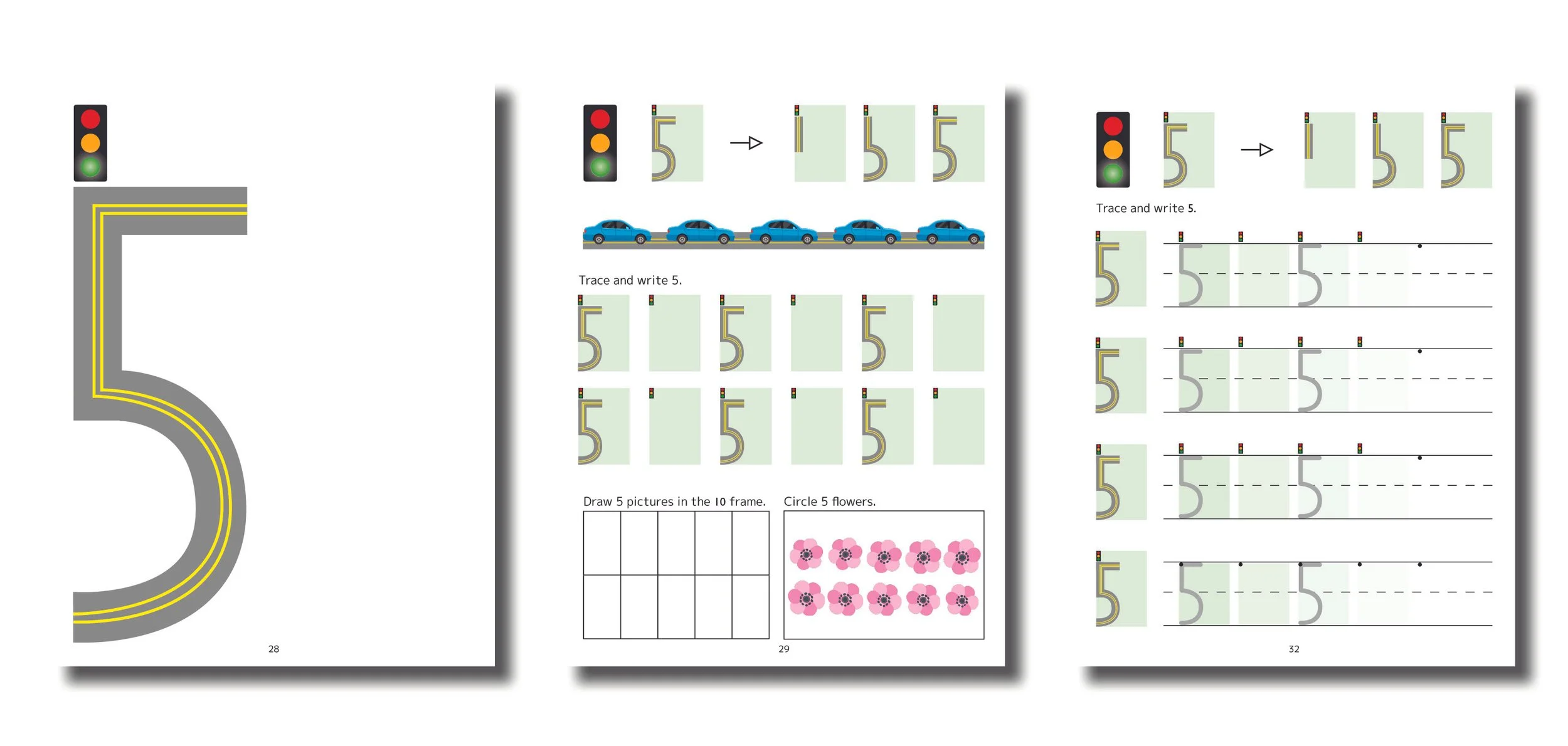
In addition to number formation, the curriculum incorporates early math concepts such as counting, one-to-one correspondence, and number recognition, helping students connect the written number to its mathematical meaning.
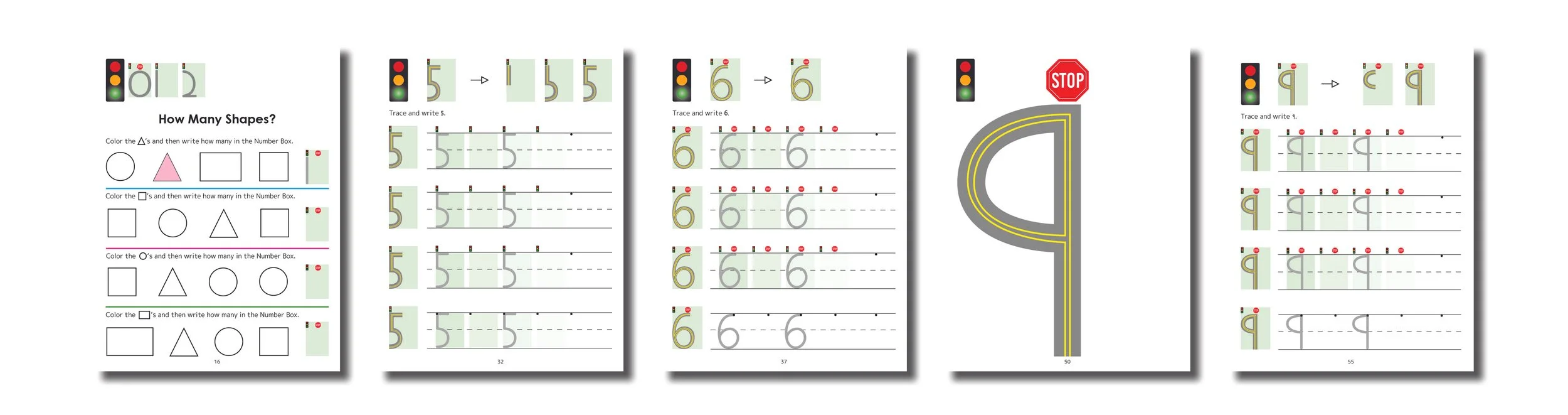
To ensure students acquire proper motor patterns, they always begin by tracing a perfect model before attempting independent writing. Our solid line models replace traditional dashed lines, presenting letters as complete strokes rather than fragmented parts, crucial for visual processing and symbol recognition.
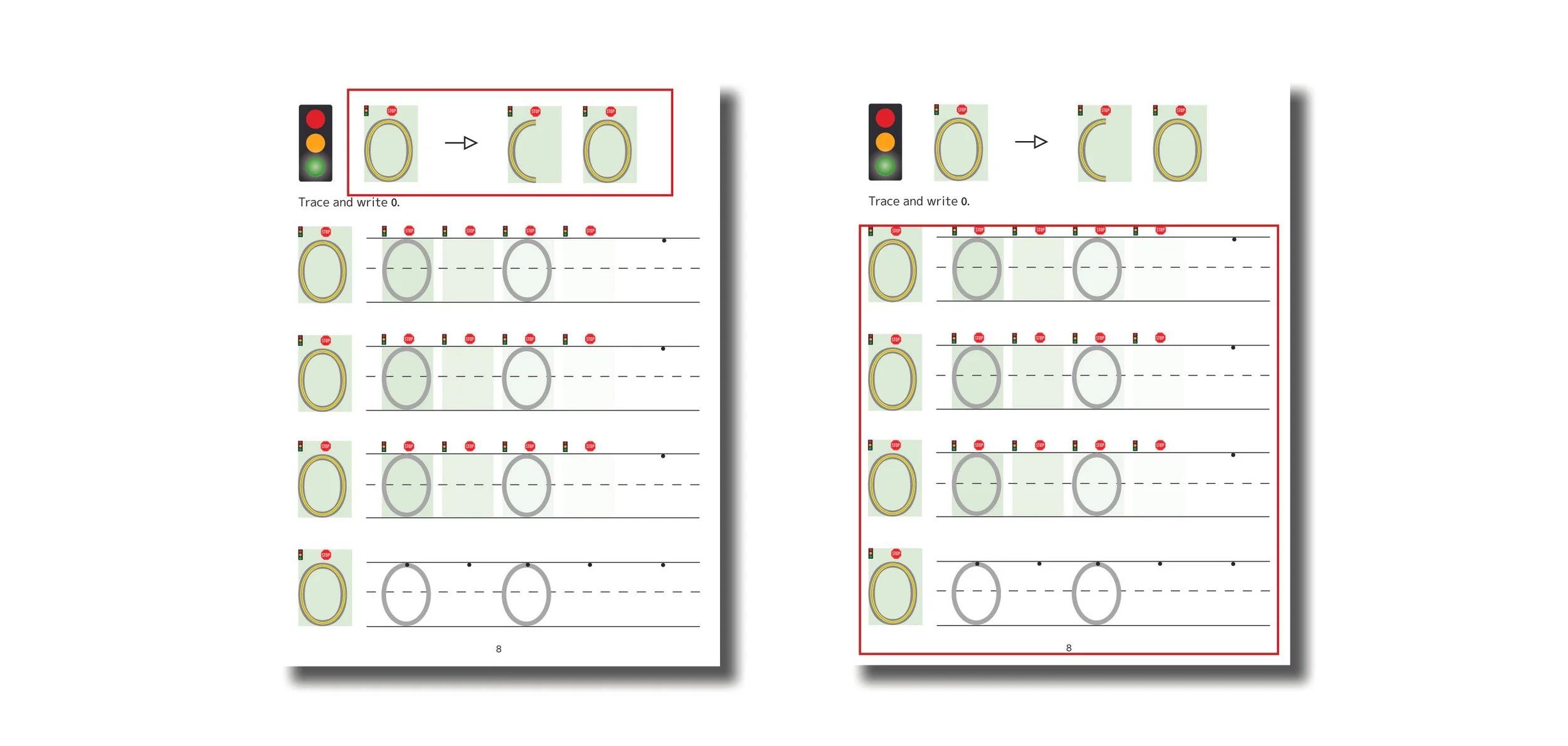
Through consistent structure, repetition, and multi-sensory engagement, 1 2 3 GO! helps students build a strong foundation for both clear number writing and early numeracy skills.
Why This Program Works
It Simplifies Number Formation
Students learn that all numbers are built from four foundational strokes: the Tall Road, Small Road, Tall Turn, and Small Turn. Understanding these building pieces helps students construct numbers with greater accuracy rather than memorizing each number as a separate form.
It Strengthens Motor and Visual Memory
By learning how numbers are constructed, students can mentally take apart and reconstruct each number formation. This process strengthens visual memory and helps students recall number formations more easily and consistently.
It Promotes Active Student Engagement
Teaching strategies in the Teacher Manual encourage students to become active participants in the learning process. Because students understand the starting point and the foundational strokes used to build each number, they are able to explain, model, and reinforce number formations themselves.
It Builds a Foundation for Early Math Skills
The program integrates early numeracy concepts such as counting, one-to-one correspondence, and number recognition. Students learn to connect the written number to its mathematical meaning while strengthening their number writing skills.
It Supports Clear and Consistent Number Writing
Through structured instruction and repeated practice, students develop strong number formation habits that support accuracy, legibility, and confidence in early math work.