
Scope & Sequence
The Write Way: Handwriting Adventures is designed to align directly with your school’s phonics curriculum, allowing letters to be introduced in the same sequence students are learning them in reading instruction.
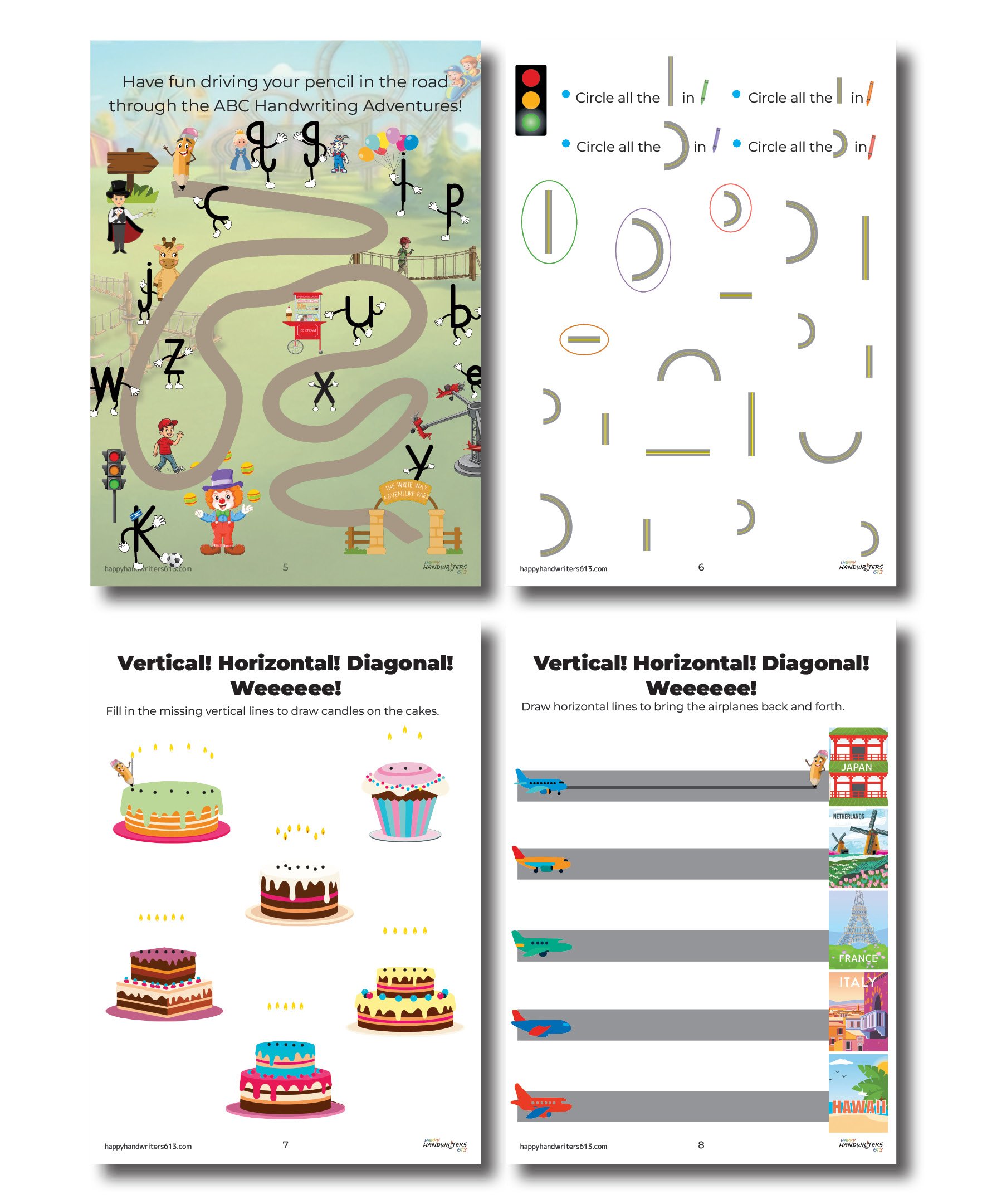
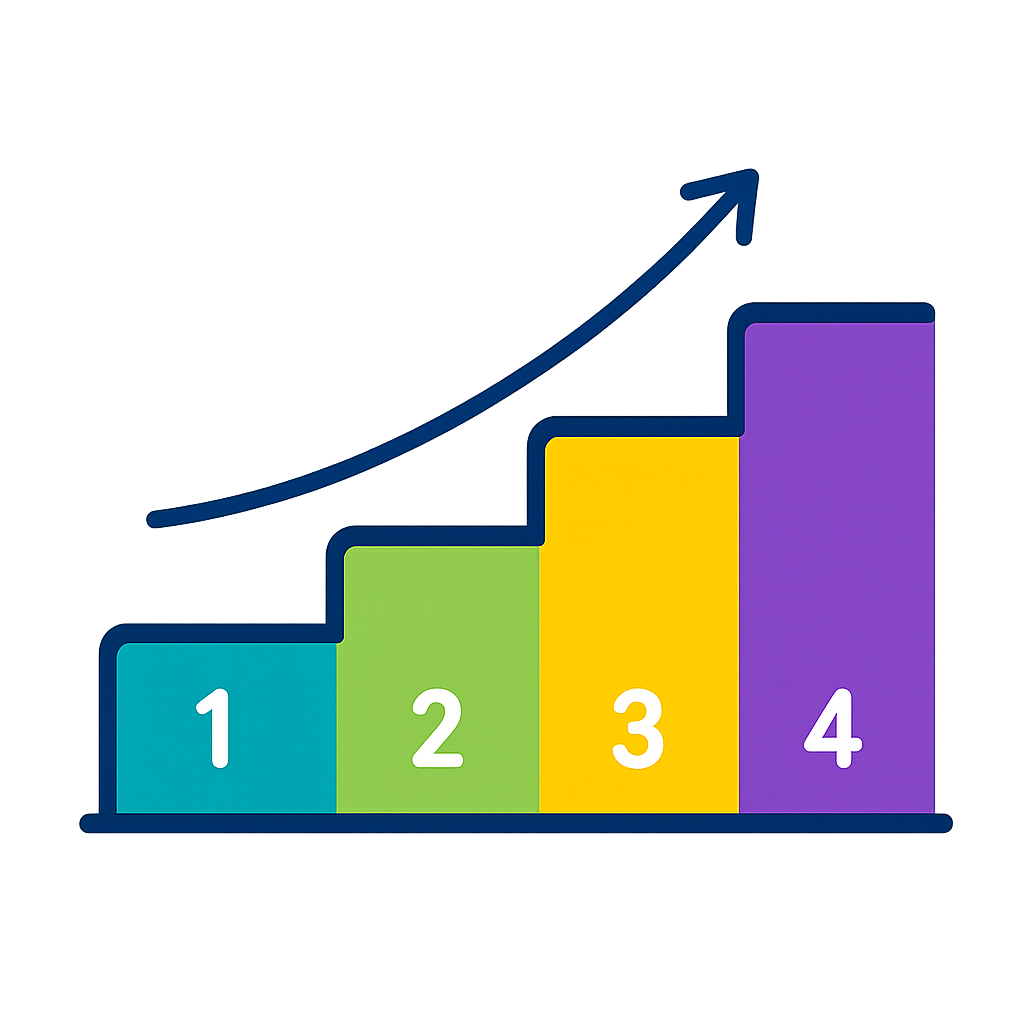
The program begins by building foundational readiness skills before formal handwriting instruction begins. Students first learn proper pencil grasp, followed by the foundational shapes used to construct uppercase letters. They then develop visual discrimination skills by identifying and writing vertical, horizontal, and diagonal lines.
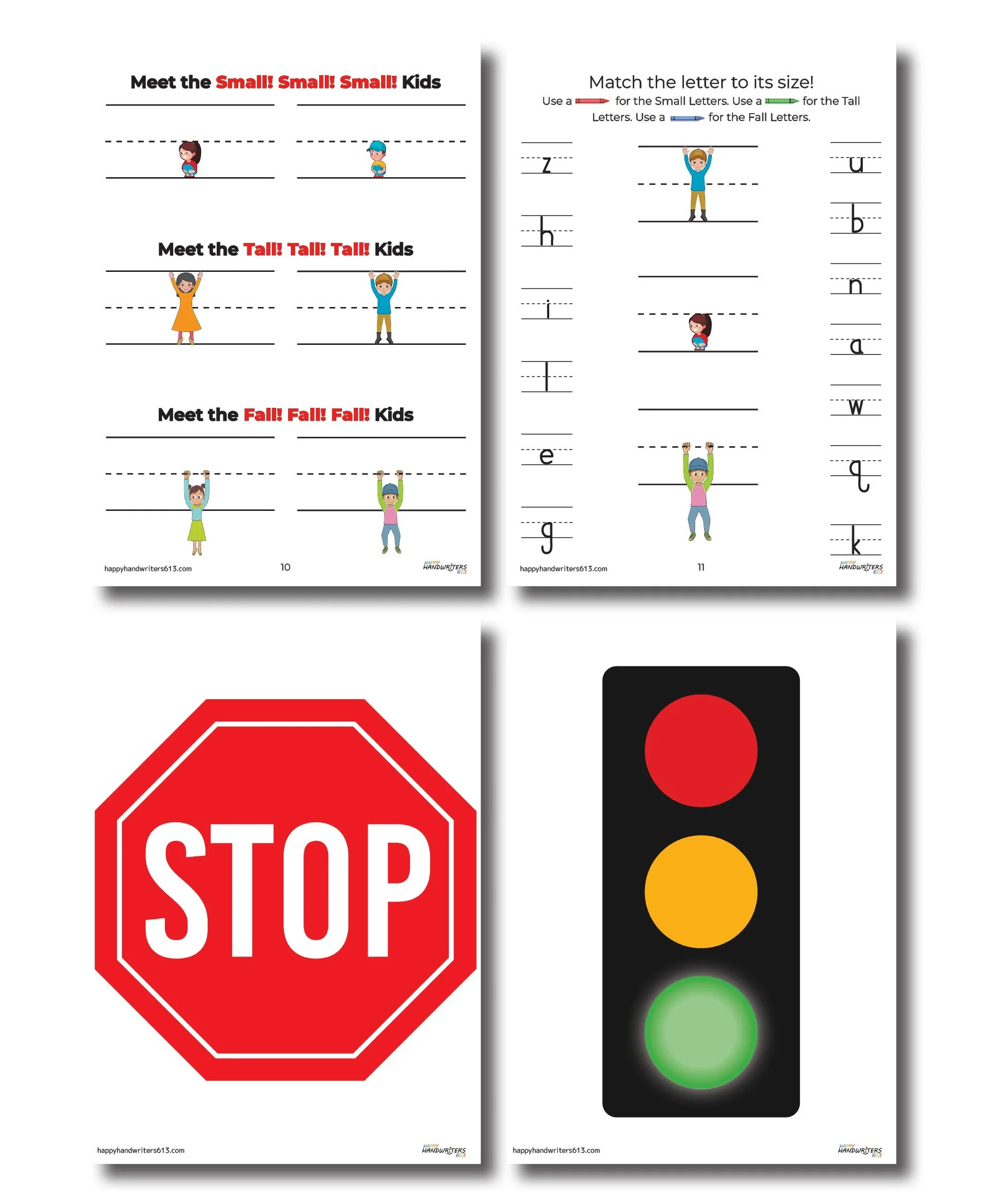
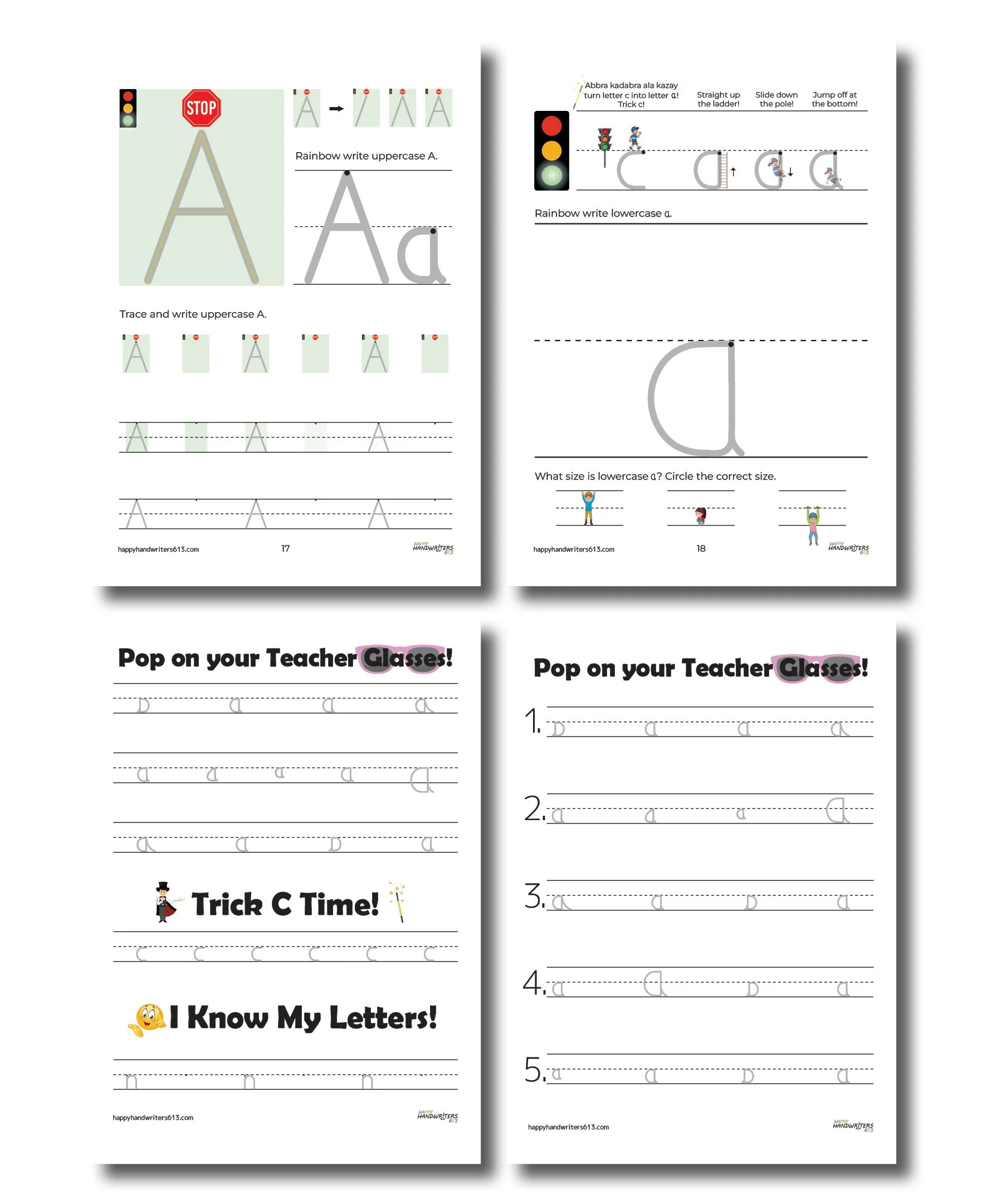
Before learning letters, students are explicitly taught letter size to develop strong line awareness and spatial understanding. Students are then introduced to directionality through the use of two concrete visual tools: the Stop Sign and the Traffic Light.
Once these foundational skills are established, students begin learning letters. Uppercase and lowercase letters are taught separately to prevent confusion, as the formations are developmentally and visually different. Each lowercase letter lesson also pairs with a corresponding Sound-to-Symbol lesson, connecting handwriting instruction to phonemic awareness and early literacy skills.
The Sound-to-Symbol lessons follow a developmental progression. During the first five letters, students practice letters in isolation while reinforcing phonemic awareness, reviewing previously learned letters, and developing self-monitoring and self-correction skills.
Beginning with the sixth letter, students start writing words using only previously learned letters while learning spacing between letters within a word. This naturally reinforces phonics, letter formation, motor memory, letter sizing, and spacing skills through built-in review.
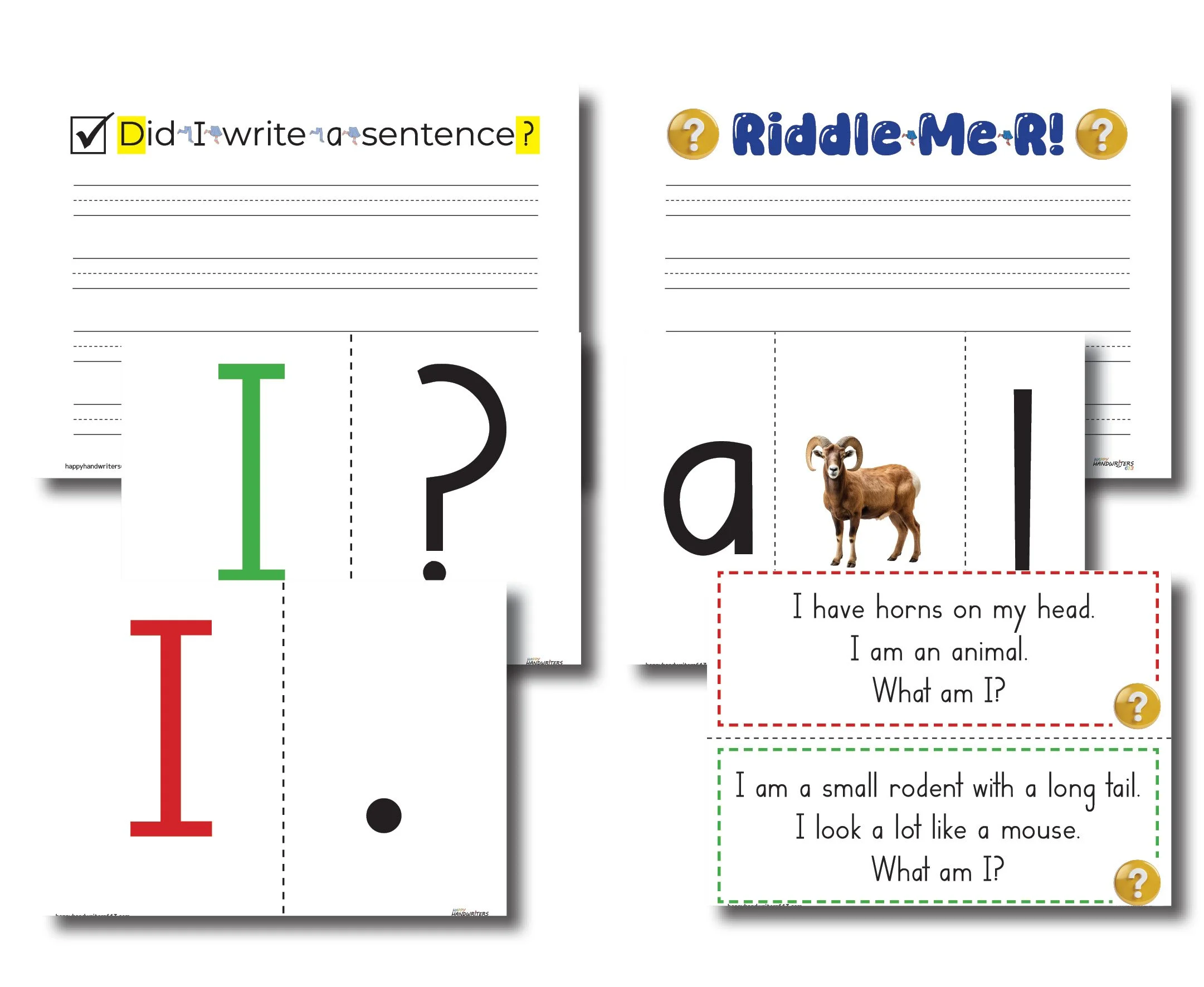
As additional letters are introduced, students progress to spacing between words and eventually sentence writing. At this stage, paper orientation shifts to landscape format to better support sentence spacing and written organization.
The Sound-to-Symbol worksheets are provided digitally through the Drive, while many of the hands-on, multi-sensory materials used throughout the lessons are included within the Teacher Supplemental Packet. Lessons are also designed with flexibility in mind, allowing teachers to adapt pacing and instructional time based on the needs of their students and classrooms.